【Italian Art Appreciation #5】 What the Masterpieces of Ancient Sculpture Selected from Three Museums Tell Us - Toshikazu Kawahara
 This article introduces masterpieces of ancient sculpture selected from three major Italian museums, discussing their realism and pursuit of ideal beauty.
Summary
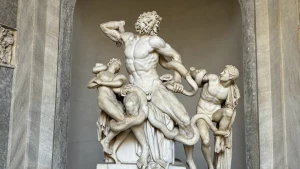
This article, the fifth in a series on Italian art appreciation by Toshikazu Kawahara, examines selected masterpieces of ancient sculpture from the Naples National Archaeological Museum, the Vatican Museums, and the Capitoline Museums. The author notes that much Roman sculpture is a copy of Greek works, characterized by the perfect proportions and ideal beauty pursued during the Greek Classical and Hellenistic periods. Roman sculpture also developed portraiture that sharply depicted individual features, unlike the idealized Greek style. Featured works include the 'Venus of Capua,' 'Venus Callipygos,' 'Doryphoros,' 'Resting Hercules' (Farnese Hercules), 'The Farnese Bull,' 'Apoxyomenos,' 'Apollo Belvedere,' 'Laocoön,' 'Tiber River,' 'Augustus of Prima Porta,' 'Capitoline Venus,' 'Dying Gaul,' and the 'Equestrian Statue of Marcus Aurelius.' These pieces demonstrate mathematically precise anatomy and the dynamic expression typical of the Hellenistic period. Works like 'Laocoön' and the 'Belvedere Torso' profoundly influenced Renaissance artists such as Michelangelo. Kawahara concludes that the loss of such realism in Europe after the legalization of Christianity stemmed from viewing humanity only as God's creation in a prescribed manner, suggesting these ancient sculptures teach the importance of viewing the world subjectively.
(Source:美術展ナビ)