Aoyama Shin | Kyosuke Higuchi's 'Executing Init and Fini' (Part 1)
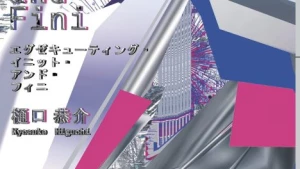
 Kyosuke Higuchi's novel 'Executing Init and Fini' utilizes LLMs extensively, exploring its creation process, historical context of text generation, and reader interaction.
Summary
This review by Aoyama Shin, the first part of an analysis of Kyosuke Higuchi's novel 'Executing Init and Fini,' highlights the extensive use of LLMs in its creation process. The article notes that much of the writing process involved LLMs, with Higuchi making additions and revisions. Details on the production methods, Higuchi's intentions, and a historical overview of machine-generated text are available in the novel's appendix and online. The review shifts focus to how readers can respond to such a work, drawing parallels to interactive AI services and the concept of future books that prompt continuous reader engagement. It suggests that LLMs interpret dialogue as an optimized mode for sustained human input and feedback, enabling them to form relationships with humans by performing dialogue. The novel is presented as a collection of fragments, with many LLM-generated pieces underlying its sections, accessible through Higuchi's online notes. The introductory piece, 'Log,' is also based on LLM output, creating a hierarchical structure that, while clarifying, represents only one facet of the work. The novel is described as the selection of the most probabilistically valid arrangement of countless potential text fragments. It embodies a superposition of all texts written and yet to be written, a faint image projected onto narrative space. The review itself is partly constructed by combining and revising the author's previous texts, acknowledging its nature as a constructed entity that, like fiction, can become an indispensable element for perceiving the world. The 'Init Section' and 'Fini Section' of the novel are based on a short story, depicting two beings, 'Init' and 'Finny,' in a 'character universe' ('jiuchu'), symbolizing the flow of narrative through the connection and disconnection of characters. The blacked-out text areas evoke works like Enjou Tou's 'Palimpsest,' suggesting a narrative built from existing forms to create new meaning. Higuchi's approach is likened to shuffling tarot cards, focusing on superficiality as a method for continuous writing, using LLMs not to connect to something beyond, but as a field for horizontal expansion. This embrace of superficiality, thoughtlessness, and imitation is presented as a necessary response in the current landscape. The review posits that continuous writing on the same 'square' creates a 'hole' ('ana') in the text itself, a 'character hole' ('moji-ana'), which communicates with the unknown external. This extreme superficiality, rather than obscuring depth, hints at the existence of imperceptible realms, necessitating the novel's physical form as a tangible object. The exaggerated materiality draws attention to these 'holes,' making readers aware that while texts can be read, there's no guarantee they are directed at us, leading to a sense of fatal misdelivery and contagion. The words emanating from these externally connected holes and echoing elsewhere leave the reader questioning what they have truly read.
(Source:artscape)